




Supply chain
We have formulated principles on this topic
As a trade and tourism company, we source products and services from a large number of suppliers and from different global supply chains. To minimise the environmental and social impact of our actions wherever possible,
- our Guideline on Sustainable Business Practices defines the principles governing our business relationships, including the protection of biodiversity and the bans on forced and child labour.
- our guidelines on issues such as child and forced labour define a binding framework for action in our business relationships with our partners.
- we have committed ourselves in our Declaration of Principles to strengthening human and environmental rights and to preventing, minimising and remedying violations of these rights in our own business activities and along global supply chains. Our Group’s entities that fall under the German Act on Corporate Due Diligence Obligations in Supply Chains (LkSG) have, each published their own Declaration of Principles.
With regard to the protection of human rights and environmental goods in the supply chain, our Supplier Code of Conduct sets out binding expectations which suppliers must observe and comply with in their business dealings with REWE Group companies. They should:
- not violate human rights and environmental obligations and pass on the obligations in the upstream supply chain in a binding manner.
- minimise the environmental impact of their business activities, actively implement measures that promote environmental protection and with all applicable local and internationally recognised environmental standards and laws.
How we identify and deal with risks
We use a four-step approach for more responsible supply chains, to address and mitigate risks to people, animals and the environment within our supply chains.
As part of the implementation of the German Act on Corporate Due Diligence Obligations in Supply Chains (LkSG), we have implemented a comprehensive and ongoing risk management system with regard to human rights and environmental due diligence in order to identify risks in our supply chains and in our own business operations, take measures to minimise them and assess their effectiveness. In addition, the risk management system includes two further steps:
- Grievance mechanism: Employees and other potentially affected groups of people can use our digital grievance system to report human rights violations and environmental concerns attributable to the REWE Group, its subsidiaries or our suppliers at any time. Both remedial and preventive measures are implemented on the basis of the complaints so that people and the environment can be protected, and violations can be prevented as best possible.
- Dealing with violations: All reports are investigated confidentially. We hold discussions with suppliers, complainants and NGOs, and take appropriate action where necessary.
The objectives we have set ourselves
We define objectives for the entire value chain, for example:
- We are committed to scientifically-based emission reduction targets (see the Climate Protection focus topic).
- We are placing a greater focus on animal welfare in our private label supply chains that include products of animal origin (see the Animal Welfare focus topic).
- With regard to direct suppliers and production sites in high-risk countries1 within the supply chains of the REWE, PENNY and toom Baumarkt DIY store, we also aim to fully integrate the strategic production sites and suppliers into a training programme (capacity building) by the end of 2030.
- We have achieved our target of improving access to grievance mechanisms within our supply chain by 2025 (for further information, see the Human Rights focus topic). We will continue to focus on and actively press ahead with this topic.
- We have also achieved our objective of fully integrating all relevant food and non-food suppliers of RFE (REWE Far East) into an environmental programme by 2030. All food and non-food Tier 1 production sites in risk countries are integrated into our social improvement programme.
Focus on raw materials and services
The human rights and environmental risk assessments that we carry out annually and on an ad hoc basis are designed to identify and assess the potential and actual impacts of our business activities and those of our suppliers along our supply chains. Based on our analyses, we prioritise the following raw materials and services:
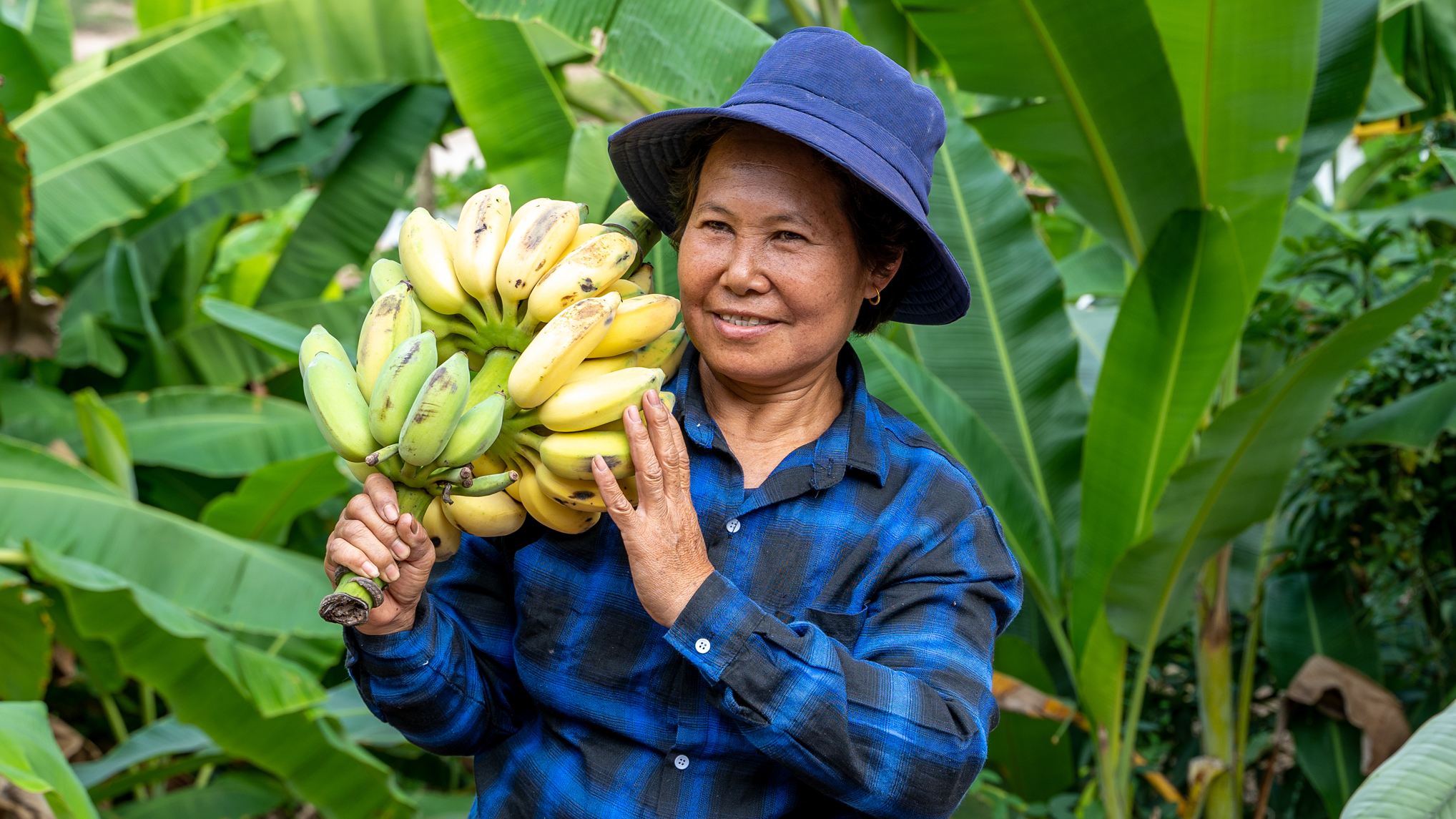
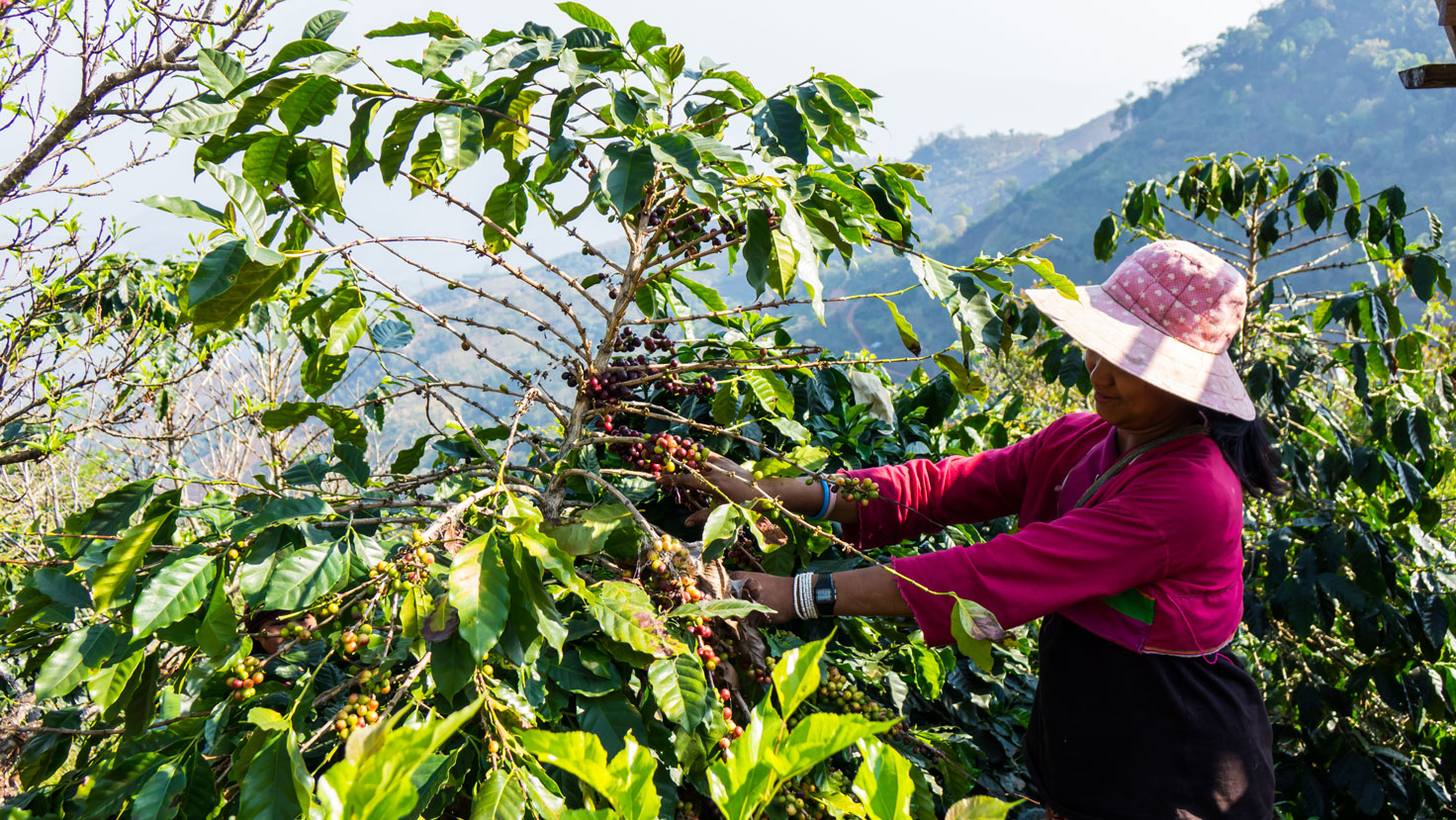
- Food: Fruit and vegetables, with a focus on bananas, cocoa and coffee; the production of fish products; and soya as animal feed
- Non-Food: The production of textiles, wood and paper, peat soils and natural stone
- Services: Tours