



To achieve our reduction targets, we are implementing specific measures within the company and throughout our supply chains.

226
With the “Gemeinsam für mehr Klimaschutz” (Together for more climate protection) initiative, we support private label products suppliers in defining SBTi climate targets and implementing reduction measures. Since 2025, we have been asking all of our private label suppliers to make an SBTi commitment. Starting in 2026, this will be included as a selection criterion in our procurement process. In an online training session, we explained the steps involved, from making an SBTi commitment through to validation. By the end of 2025, 226 suppliers (accounting for 52.3 per cent of product-related private label targets) had already made an SBTi commitment or achieved SBTi validation.
In 2025, through the “Förderprogramm Klimaschutz” (Climate protection support programme) under the aegis of the Competence Centre for Agriculture, we once again offered our private label suppliers co-financing for projects aimed at reducing GHG emissions in the supply chain and engaged in dialogue with approximately 50 private label suppliers on the topic of climate protection.
We are constantly expanding our range of vegan private label products, the production of which generates emissions comparable to those of similar animal-based products1 (see also the focus topic Nutrition and Protein Strategy).
At the Corporate Level2, we are reducing our consumption of fossil fuels, including district heating, by 20 per cent by 2030 compared to the base year 2019 (see Objectives and KPIs). In 2025, our logistics department tested the use of electric and hydrogen-powered lorries, for example, in store delivery.
To ensure that our soya feed supply chains are deforestation- and conversion-free, we rely on recognised certifications or low-risk sources.3 We are also involved in initiatives such as “QS-Sojaplus” (QA soy plus) and the “Donau Soja” (Danube soya) protein partnership, thereby helping to promote soya of European origin in order to reduce emissions from land-use change.
In 2025, BILLA in Austria carried out a pilot project to introduce an internal carbon price. This was used as a benchmark for evaluating logistics and energy-related investment projects. The internal carbon price helps to anticipate future external carbon costs and manage emissions reductions in a cost-effective manner.
The DERTOUR GROUP is a founding member of “KlimaLink e. V.” (ClimateLink) with the aim of recognising the climate impact of travelling on the product (carbon footprint) through an industry-wide standard. This is already evident for flights in brick-and-mortar travel agencies. Starting in 2026, emissions from hotels and package holidays will be reported externally. In addition, the DERTOUR Group has a strategic partnership with the Lufthansa Group, which enables it to offer more climate-friendly air travel through the use of Sustainable Aviation Fuels (SAF). Since 2015, projects promoting climate-conscious travel have been carried out as part of the organisation’s membership of Futouris e. V., the sustainability initiative for the German-speaking travel industry.
We are implementing climate protection and decarbonisation through our own initiatives as well as through projects with partners such as NABU. We also link our financial strategy to our sustainability strategy.
We have been making our supply chains deforestation- and conversion-free since the end of 2025. Our goals of sourcing primary high-risk raw materials4 from certified sources or low-risk origins have been met or are nearly met (see Objectives and KPIs). We aim to further expand the share of our physical supply chains in future.
By 2025, REWE and PENNY in Germany had further reduced their emissions: by 16.6 per cent for Scope 1 and 2, and with initial progress on Scope 3. One of the reasons for this development is that, in 2023, we became the first German food retailer to issue a sustainability-linked bond worth 900 million euros on the capital market. The terms of this bond are directly linked to the achievement of our climate targets for REWE and PENNY in Germany. The second Progress Report on this topic was published in July 2025.
In Germany and Austria, we more than halved our GHG emissions per unit of retail floor space at Corporate Level between 2006 and 2021.
Since 2022, REWE in Germany has been supporting the NABU Climate Fund with at least five million euros annually. By the end of 2025, just under 4,515 hectares of moorland (2024: 4,000) had been secured for rewetting across seven European countries (2024: six), thereby saving 875,000 t CO2e. Europe’s largest moorland renaturalisation project for former agricultural land is currently underway in the Ahlen-Falkenberger Moor in the Cuxhaven district. More on this subject can be found in the focus topics Sustainable Consumption and Biodiversity.
By early 2025, we had switched our entire range of soils5 to peat-free alternatives; REWE and PENNY had already achieved this target in 2024.
523
Since 2008, 523 stores (2024: 448) have been created in Germany in accordance with the green building criteria of the “Deutsche Gesellschaft für Nachhaltiges Bauen” (German Association for Sustainable Building); 178 (2024: 183) are under construction or in planning. Furthermore, there are now 11 (2024: 11) storage sites of this kind, with a further eight at the planning or construction stage. There are 22 green buildings at toom Baumarkt DIY store (2024: 18). In addition, 50 BILLA and BILLA PLUS stores in Austria had Greenpass certification for their climate-resilient construction at the end of 2025. We intend to add a further 20 by the end of 2026.
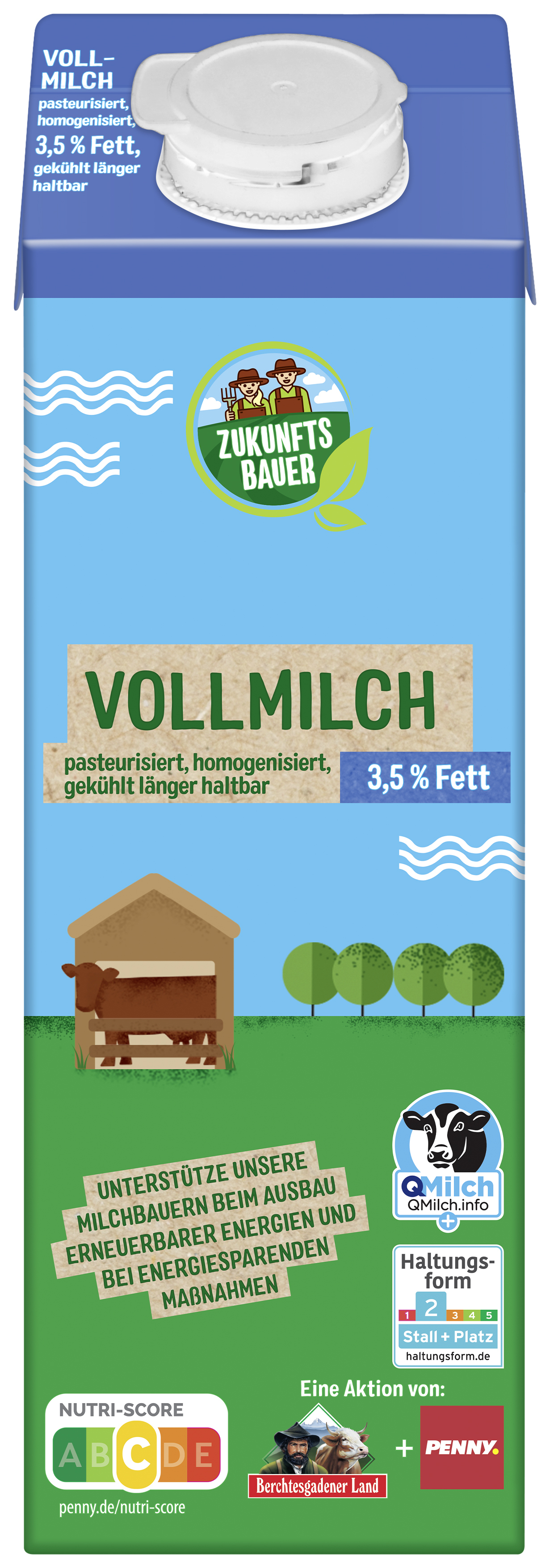
Together with the Berchtesgadener Land dairy, we at PENNY are supporting farmers through the “Zukunftsbauer” (future farmer) project to help them make their farms more climate-friendly. For every “Zukunftsbauer” product sold, a contribution goes into the fund. Between 2021 and 2025, this amounted to around 2.6 million euros. Just under 700 measures relating to energy generation, storage and conservation have already been implemented on family-run farms in the Alpine region.
Full wind power ahead
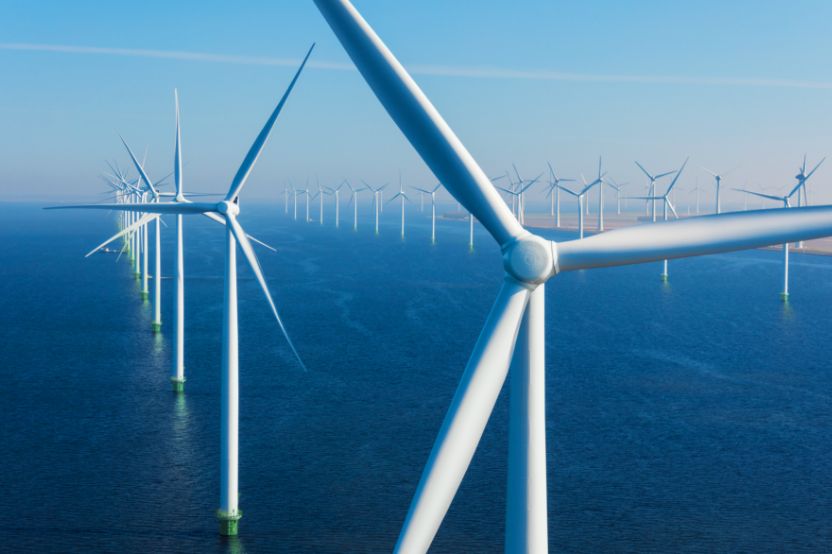
We have been using certified green electricity in our stores, DIY stores, warehouses, and travel offices in Germany and Austria since 2008. We were the first food retailer6 in Germany to conclude a long-term Power Purchase Agreement for an offshore wind farm. Starting in 2026, 1,500 stores in Germany and Austria will be supplied with electricity from the Borkum Riffgrund 3 wind farm.