

We enable consumers to make informed purchasing decisions through transparency, labelling and communication tailored to specific target groups.
The REWE Group takes sustainability considerations into account when developing its product ranges, including through collaboration with FoodTech start-ups, regular reviews of nutritional values in private label recipes, a gradual shift towards recognised dietary guidelines such as the Planetary Health Diet, and the expansion of our plant-based product ranges. Further information on how to achieve a balanced diet and on the expansion of plant-based products can be found in the chapter Nutrition and Protein Strategy.
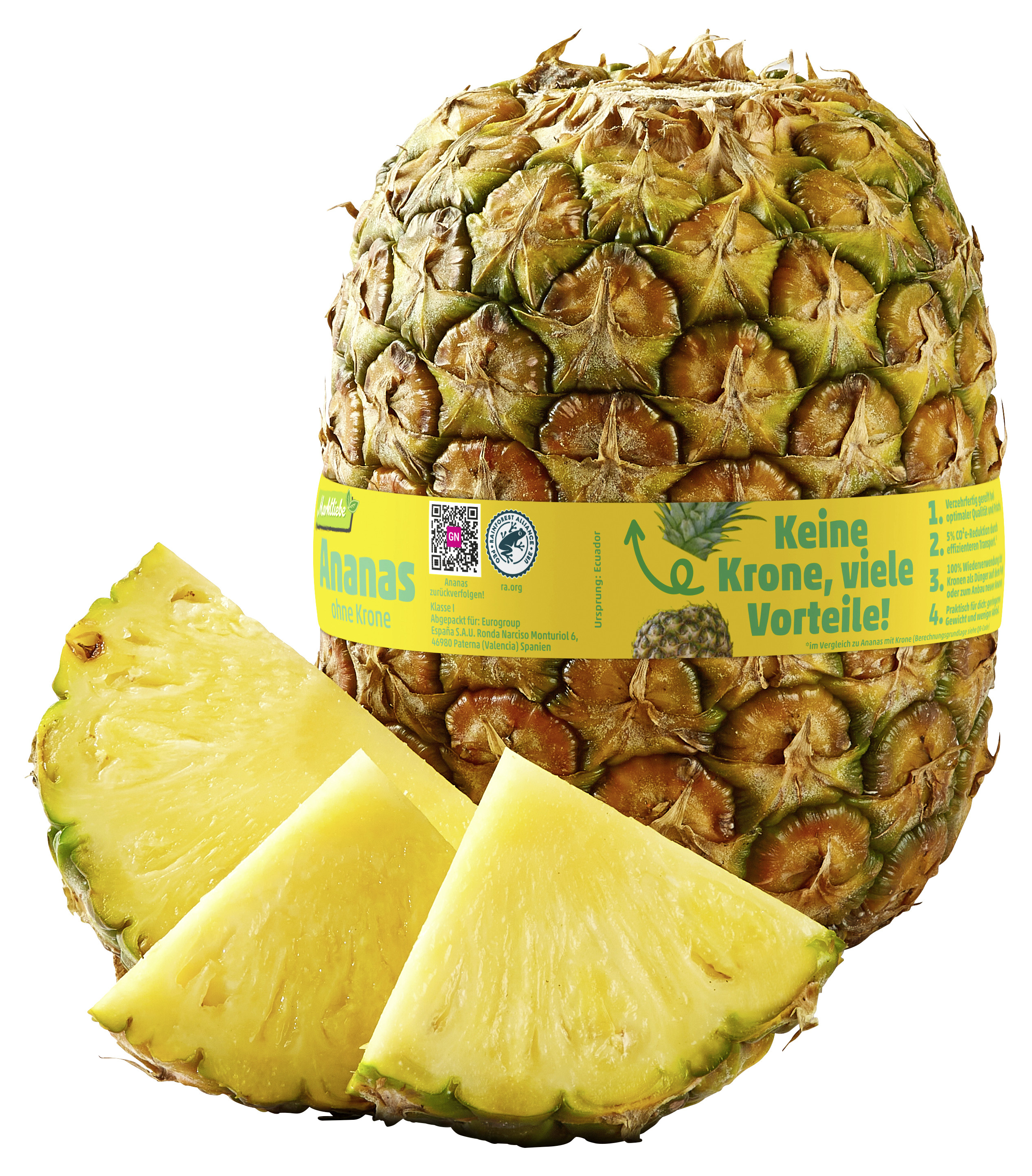
We reduce food waste by using forecasting systems and by giving away food that is no longer saleable, but still edible to partners such as food banks (see Successes). Furthermore, under the “Naturgut Bio-Helden” (organic heroes) brand, we market organic fruit and vegetables that may have cosmetic imperfections at PENNY in Germany, as well as “Wunderlinge” at BILLA, BILLA Plus, PENNY, ADEG and Sutterlüty in Austria. In 2025, PENNY in Germany began selling pineapples without their crowns in order to reduce transport emissions. The fruit is sold in the markets without the green leaves – this saves space and weight, and thus reduces carbon emissions, without compromising on quality or flavour. Furthermore, in the region of origin, the crown is reused as a natural fertiliser and for growing new fruit.
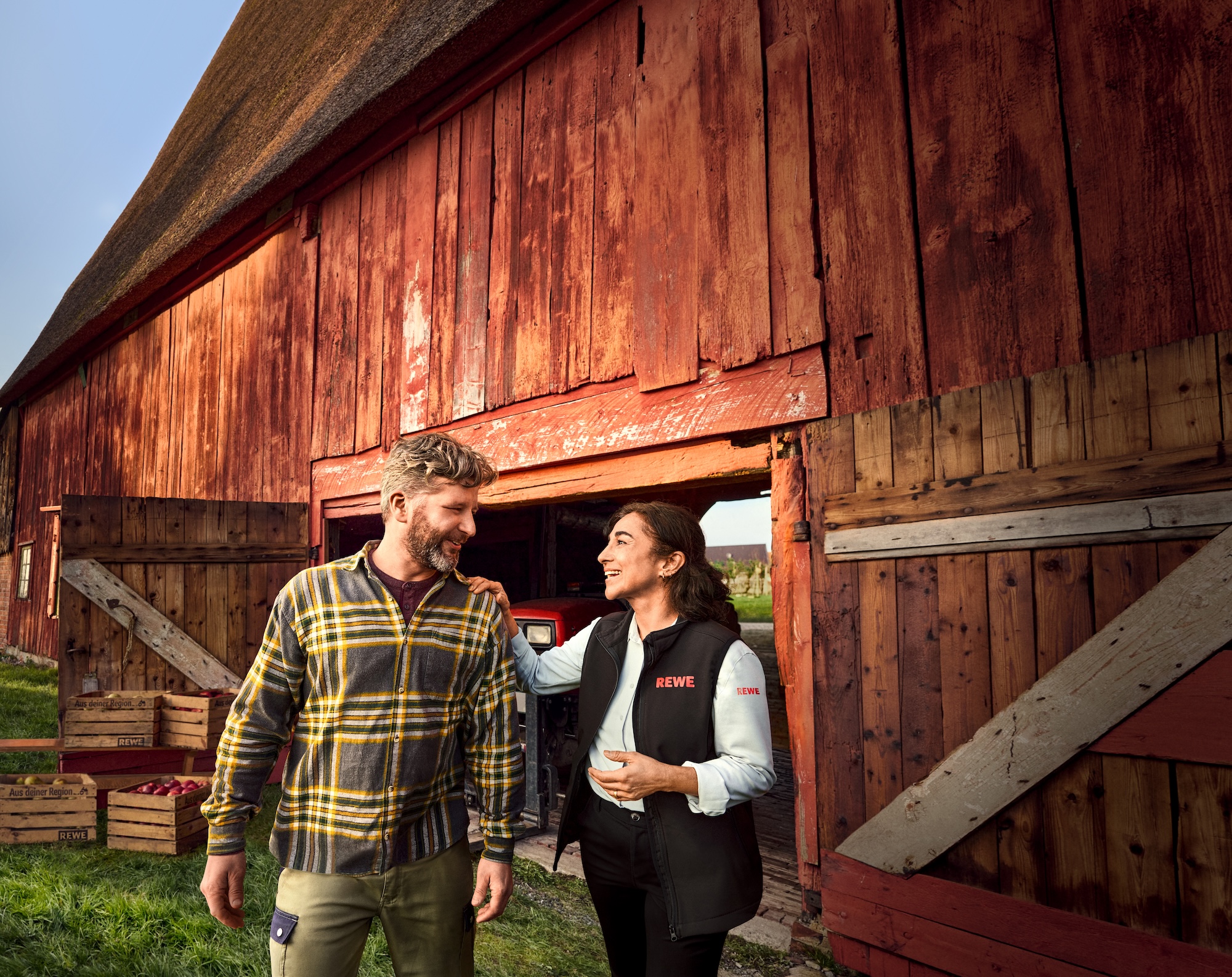
Since the beginning of 2025, our employees have had the opportunity to gain insights into the everyday lives of local producers through our new practical programme „Agrar-Akademie“ ” run by the Competence Centre for Agriculture. This training and direct dialogue promote mutual understanding and customer advice in the shops.
2050
As part of its “Bewusst Reisen” (Conscious Travel) programme, the DERTOUR Group is awarding more sustainable offers from the tour operators DERTOUR, ITS and Meiers Weltreisen with the “engage – people & planet” logo, which depicts a dark green leaf in the shape of a heart. This label identifies hotels that are certified according to the internationally recognised sustainability criteria of the Global Sustainable Tourism Council (GSTC). The catalogue portfolio includes around 2,050 hotels (2024: 1,800) with the “engage” logo. Furthermore, the DERTOUR GROUP has been a member of Futouris e. V., the sustainability initiative for the German-speaking travel industry, since 2015. As part of this initiative, projects aimed at reducing food waste, amongst other things, are being carried out.
Making sustainability tangible
We communicate regularly on sustainability, for example through campaigns promoting regional animal welfare and local suppliers, such as the “Good Food” initiative at BILLA in Austria. In 2025, REWE in Germany, together with partners such as Oatly, Berief, and vly, launched a petition titled “Gleicher Steuersatz für Pflanzendrinks” (Equal Tax Rate for Plant-Based Beverages), calling on the German Bundestag to tax plant-based milk alternatives – such as oat, soya, and pea beverages – at the reduced value-added tax rate of 7 percent in the future – to promote greater fairness, sustainability, and freedom of choice. As in the previous year, toom Baumarkt DIY store once again highlighted in its stores in 2025, amongst other things, how its customers can build and live in a way that is free from harmful substances. The topic of healthy living was discussed in cooperation with Blauer Engel (Blue Angel).
With our commitment – also together with partners – we are driving the transformation in society.
25 million
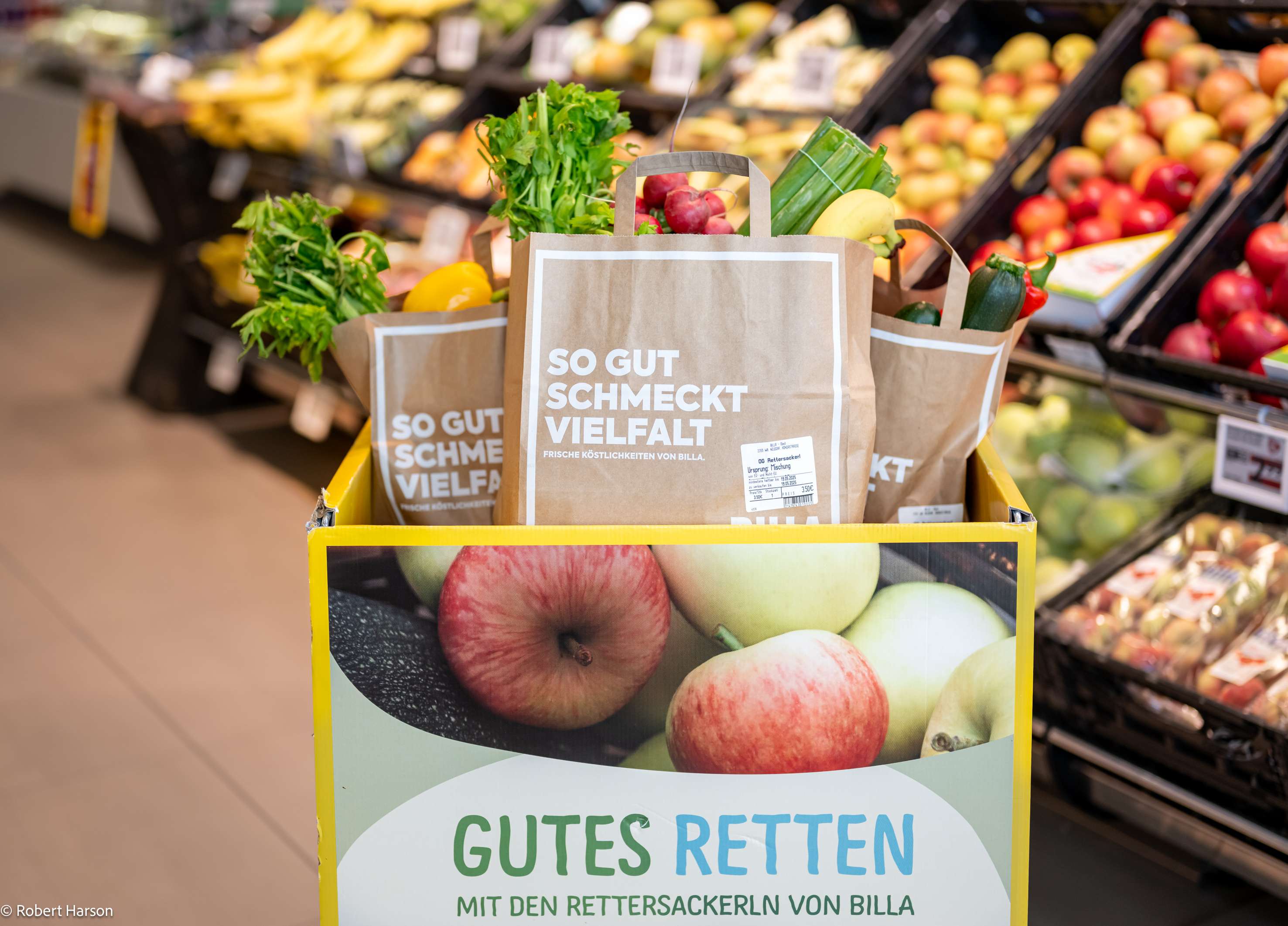
In 2025, an annual average of 98 per cent of groceries were sold at REWE and PENNY in Germany. Any food that can no longer be sold but is still safe to eat has been donated free of charge by REWE since 1996 and by PENNY since 2007 to food banks at over 980 locations or to partners such as foodsharing e. V. Since 2023, we – together with REWE and PENNY in Germany – have been partners in the Federal Ministry of Agriculture’s Pact Against Food Waste, which sets out ambitious targets – including a 30 per cent reduction in food waste by 2025 and a 50 per cent reduction by 2030. In 2025, the REWE Group in Austria donated more than 25 million meal equivalents1 from its BILLA, BILLA PLUS (over 23 million) and PENNY stores (over 2 million) to charitable organisations. In addition, PENNY in Austria features the Austrian Federal Ministry’s “Lebensmittel sind kostbar!” (Food is precious!) logo on its private label fresh produce and in accompanying promotional materials. In addition, “Rettersackerl” bags are available: at PENNY for fruit and vegetables, and at BILLA also for bread and pastries.
In 2025, the REWE Group in Austria – at BILLA, BILLA PLUS, BIPA, PENNY and ADEG saved over 90,000 rolls of receipt paper – equivalent to over 8,400 kilometres of receipt paper – by introducing digital receipts via the “jö Bonus Club” app.
Support for the NABU Climate Fund
REWE raises customer awareness of the importance of moors for climate protection. Over 1,500 products from REWE Bio and REWE Beste Wahl carry the NABU climate protection label - and every purchase supports the NABU Climate Fund. This meant that, by the end of 2025, around 18.91 million euros (2024: 12 million euros) could be allocated to the rewetting of peatlands – see also the focus topic Climate Protection.
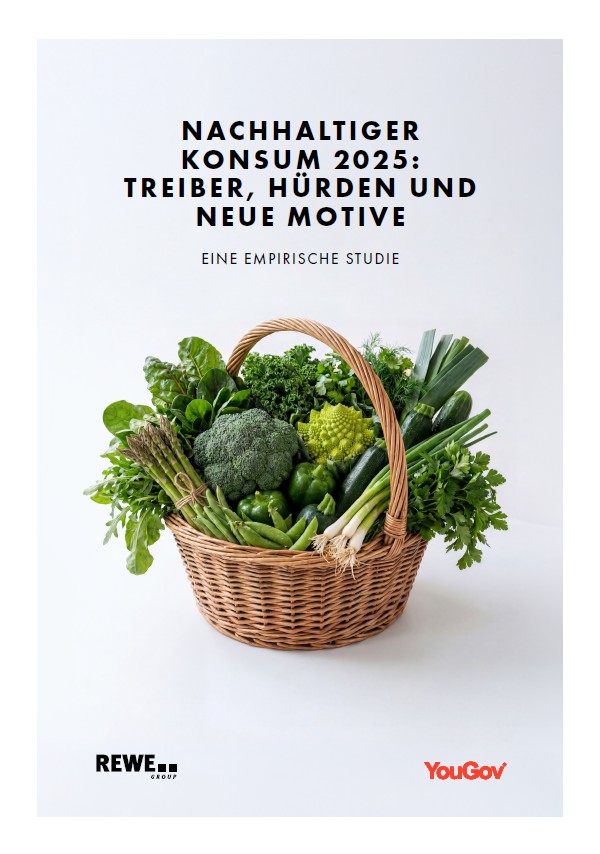
Together with YouGov, we have relaunched the 2025 study „Nachhaltiger Konsum“ (Sustainable Consumption) to re-analyse the drivers of, and barriers to, more sustainable purchasing decisions. In doing so, we focus in particular on relevant factors within the product ranges of organic, vegan alternatives and regional produce. The most recent study showed that more sustainable food continues to be a trend across all generations – even though this trend had recently slowed down for economic reasons.