

Topic |
KPI/Objective |
Status |
Status |
Status |
Measures |
|---|---|---|---|---|---|
|
Group-wide greenhouse gas emissions |
We aim to achieve net zero emissions as a Group by 2050, with a focus on significantly reducing emissions in our own operations and in our supply chains. |
See focus topic Climate Protection |
|||
|
Greenhouse gas (GHG) emissions at corporate level |
We are committed to reducing our Scope 1 and Scope 2 GHG emissions by 42% by 2030 compared with 2021.1 |
1.1% |
-8.9% |
-16.6% |
|
|
Electricity consumption |
We will reduce electricity consumption per square metre of sales area by 10% by 2030 compared with 2019.2 |
-9.1% |
-6.9% |
-7.7% |
|
|
Demand for fossil fuel-based heat sources |
We will reduce the consumption of fossil fuels, including district heating, at corporate level by 20% by 2030 compared with 2019.3 |
-14.2% |
-11.9% |
-12.3% |
|
|
Energy consumption |
Total energy consumption in GWh.3 |
6,665 |
6,899 |
6,993 |
|
|
Stores according to the German Sustainable Building Council (DGNB e. V.) standard |
Stores completed according to DGNB e. V. (German Sustainable Building Council) requirements (green building).4 |
398 |
448 |
523 |
|
|
In progress
Objective achieved
Objective not yet available
Objective not achieved
|
|||||
|
1
Scope: All consolidated companies of the REWE Group that were part of the group in 2025, excluding entities that left the Group before the financial year. Independent retailers are no longer included in the figures, as they do not fall under Scope 1 and Scope 2 in accordance with the Corporate Sustainability Reporting Directive (CSRD) and the SBTi.
2
Scope: All countries and the REWE Group companies, including retailers. Entities that left the group prior to the financial year were not included. Adjustments to prior-year figures required due to revised area data.
3
Scope: All countries and the REWE Group companies, including retailers.
4
Scope: The REWE Group in Germany. |
|||||
Topic |
KPI/Objective |
Status |
Status |
Status |
Measures |
|---|---|---|---|---|---|
|
Training programme for better working conditions |
We will integrate our strategically relevant production sites and strategically relevant suppliers of our private label products into our Capacity Building Training Programme by the end of 2030.1 |
See focus topic Human Rights |
|||
|
Proportion of production sites in the stages of the Social Improvement Programme1 |
Onboarding stage |
1.1% |
0.1% |
0.3% |
|
|
Audit stage |
98.9% |
99.9% |
99.7% |
Topic |
KPI/Objective |
Status |
Status |
Status |
Measures |
|---|---|---|---|---|---|
|
Grievance mechanism |
We will improve access to grievance mechanisms in the relevant supply chains by the end of 2025.2 |
See focus topic Human Rights |
|||
|
In progress
Objective achieved
Objective not yet available
Objective not achieved
|
|||||
|
1
Scope: REWE and PENNY in Germany, toom Baumarkt DIY store. Calculation based on the number of production sites; includes the respective most recent production site in high-risk countries of private label suppliers to REWE, PENNY and toom Baumarkt DIY stores in Germany for food and non-food products. Figures for non-food importers not collected due to a process change.
2
Scope: REWE and PENNY in Germany, the REWE Group in Austria, toom Baumarkt DIY store, DERTOUR Group. |
|||||
Topic |
KPI/Objective |
Status |
Status |
Status |
Measures |
|---|---|---|---|---|---|
|
Food waste |
We are committed to reducing food waste in our stores (base year: 2022):1 |
See focus topic Sustainable Consumption |
|||
|
by 30% by 2025 |
See footnote 2 |
||||
|
by 50% by 2030 |
|||||
|
At BILLA (Austria): by 40% by 2030 (base year: 2019) |
|||||
|
In progress
Objective achieved
Objective not yet available
Objective not achieved
|
|||||
|
1
Scope: REWE and PENNY in Germany.
2
Achievement of this objective can only be verified once the audit report is published in autumn 2026, and as such the status cannot be reported until the Progress Report 2026. |
|||||
Topic |
KPI/Objective |
Status |
Status |
Status |
Measures |
|---|---|---|---|---|---|
|
Organic |
Share of organic products1 in the net sales value of our organic private labels and manufacturer labels in the net sales value of private labels and manufacturer labels2, 3 |
7.5% |
8.0% |
8.5% |
See focus topic Organic and Regionalism |
|
Share of organic private label products1 in the net sales value of our organic private label products2, 3 in the net sales value of private label products |
14.6% |
15.5% |
16.5% |
||
|
Share of REWE Bio1 net sales value of “REWE Bio” and “REWE Bio pflanzlich” in the net sales value of private label products3 at REWE |
16.6% |
17.9% |
18.9% |
||
|
Share of PENNY Naturgut1 net sales value of “Naturgut” in the net sales value of private label products3 at PENNY |
8.1% |
8.6% |
9.3% |
||
|
Regional concept |
Number of items3 from REWE Regional at REWE stores in Germany excluding REWE Dortmund |
944 |
930 |
934 |
|
|
In progress
Objective achieved
Objective not yet available
Objective not achieved
|
|||||
|
1
Shares excluding near and non-food, tobacco, and alcoholic drinks.
2
Scope: REWE and PENNY in Germany.
3
Only articles of which more than 1,000 units have been sold. |
|||||
Topic |
KPI/Objective |
Status |
Status |
Status |
Measures |
|---|---|---|---|---|---|
|
Packaging |
We are making 100% of our entire private label packaging more environmentally friendly by the end of 2030.1 |
See focus topic Circular Economy |
|||
|
We will double the range of private label products offered in multiple use packaging and unpackaged by the end of 2025 compared with 2021.2 |
22.1% |
22.1% |
22.1% |
||
|
We will achieve 100% recyclable plastic packaging in our private label products by the end of 2025.2 |
Topic |
KPI/Objective |
Status |
Status |
Status |
Measures |
|---|---|---|---|---|---|
|
Packaging |
We are reducing the amount of plastic in our private label packaging by 20% by the end of 2025 compared with 2015.2 |
-21.8% |
-22.3% |
-25.3% |
See focus topic Circular Economy |
|
We are increasing the recyclate content in single-use PET beverage bottles for private label products to an average of 50% by the end of 2023.2 |
50.80% |
51.26% |
51.24% |
||
|
We will achieve an average recyclate content of 30% in private label packaging by the end of 2025.3 |
34.97% |
||||
|
In progress
Objective achieved
Objective not yet available
Objective not achieved
|
|||||
|
1
Scope: The REWE Group in Germany (REWE, PENNY, toom Baumarkt DIY store), since 2019 including the international sales lines (BILLA, BILLA PLUS, PENNY and ADEG).
2
Scope: REWE and PENNY in Germany. The following packaging objectives were not achieved for 2025. Reusable packaging/unpackaged: The objective is ambitious and was not achieved due to high structural and operational complexity. Pilot projects highlight key challenges relating to customer acceptance, cost-effectiveness and scalability. Recyclability of private label packaging: The objective was not achieved due to the limited availability of alternative packaging options on the market. Consequently, in certain product ranges it was virtually impossible to make the switch by 31 December 2025. Furthermore, an inadequate data set across the supply chains makes it difficult to carry out a reliable assessment.
3
Scope: REWE and PENNY in Germany. This figure is based on assumptions and projections. |
|||||
Topic |
KPI/Objective |
Status |
Status |
Status |
Measures |
|---|---|---|---|---|---|
|
Ecosystem protection |
Through the “Blühendes Österreich” (Austria in Bloom) foundation, we support measures to protect threatened ecosystems and biotopes, thereby contributing to the goal of conserving and/or improving a total of 20 million square metres in Austria by 2030.1 |
11.0 |
13.2 |
15.6 |
See focus topic Biodiversity |
|
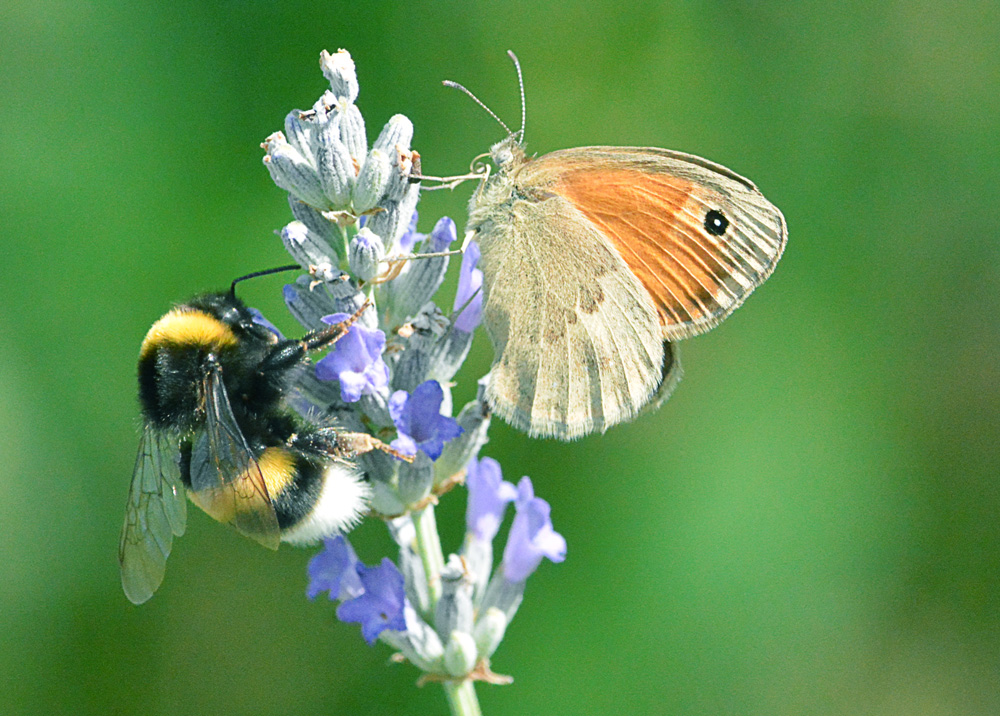
Biodiversity measures in fruit and vegetable cultivation |
We are creating or improving 24 million square meters of annual or perennial flower strips by 2026 (since the start of the project in 2009).2, 3, 4 |
16.0 |
18.2 |
22.7 |
|
|
We will plant 80,000 trees, hedges and shrubs by 2026.2, 3 |
31,900 |
78,8005 |
78,900 |
||
|
We will install 30,000 nesting aids by 2026.2, 3 |
22,700 |
27,700 |
28,800 |
Topic |
KPI/Objective |
Status |
Status |
Status |
Measures |
|---|---|---|---|---|---|
|
Peat-free soils |
We are converting our total soil range to peat-free by 2025.6 |
100% |
100% |
See focus topic Biodiversity |
|
|
Environmental protection in the supply chain |
We will integrate all relevant food and non-food production sites for private label products into an environmental programme by the end of 2030.7 |
100% |
100% |
100% |
|
|
In progress
Objective achieved
Objective not yet available
Objective not achieved
|
|||||
|
1
Cumulative area, in square metres, of land protected by the “Blühendes Österreich” (Austria in Bloom) foundation, or of high conservation value, up to the end of the respective financial year. The overall objective of 20 million square metres by 2030 was set in 2023.
2
Scope: REWE and PENNY in Germany.
3
Given the high relevance of this issue, the objectives achieved by 2025 will be extended to 2026 with higher target values.
4
Details of flowering areas that have ever been created, improved or maintained since the project began, some of which are not permanent. By 2025, around 7 million square metres of this still remained (2024: 6.8 million). Part of the increase compared with 2024 is due to a revised calculation by individual project partners.
5
Correction to the previous year’s report: Due to a recording error, the figure was revised downwards by 11,233 from 90,000 the year before. The slight decline, with planting volumes remaining the same as in 2024, is largely attributable to this adjustment. In addition, there were isolated losses due to drought and deforestation.
6
Scope: REWE and PENNY in Germany, toom Baumarkt DIY store, BILLA and BILLA PLUS.
7
Scope: REWE and PENNY in Germany, toom Baumarkt DIY store (only applies to own imports via REWE Far East). |
|||||
Topic |
KPI/Objective |
Status |
Status |
Status |
Measures |
|---|---|---|---|---|---|
|
Fresh meat |
We are transitioning our range of fresh beef, chicken, turkey and pork to at least husbandry system 3 by the end of 2030.1, 2, 3 |
9.0% |
14.6% |
24.2% |
See focus topic Animal Welfare |
|
100% of our fresh meat (beef, pork and poultry) for our private label products will be sourced from at least husbandry system 2 by the end of 2025.1, 2 |
71.0% |
74.7% |
82.4% |
||
|
We are transitioning 30% of our own-brand fresh chicken to at least husbandry system 3 by the end of 2026.4 |
15.6% |
||||
|
Processed meat products |
100% of our processed meat products (beef, pork and poultry) will be sourced from at least husbandry system 2 by the end of 2025.1, 5 |
69.9% |
82.5% |
98.7% |
|
|
Drinking milk |
100% of our drinking milk for private label products will be sourced from at least husbandry system 3 by the end of 2030.1 |
54.5% |
86.6% |
96.5% |
|
|
Fresh milk |
Since the end of 2021, 100% of our fresh milk for private label products has been sourced from Austria and Germany.1 |
100% |
96.3%6 |
98.4% |
|
|
Fish |
In the long term, we aim for 100% tracking codes on the packaging of our single-ingredient private label fish products.1, 7 |
91.4% |
93.7% |
99.6% |
|
|
We intend to offer 100% certified private label fish products in the frozen, convenience, fresh and canned segments according to the Marine Stewardship Council (MSC), GLOBALG.A.P., Aquaculture Stewardship Council (ASC) or organic certification, if available.1 |
86.6% |
84.4% |
92.0% |
Topic |
KPI/Objective |
Status |
Status |
Status |
Measures |
|---|---|---|---|---|---|
|
Sourced from Germany |
Almost 100% of the fresh pork for private label products is sourced from Germany (5xD).1, 8 |
See focus topic Animal Welfare |
|||
|
Drinking milk |
100% of our drinking milk for private label products will be sourced from at least husbandry system 2 by the end of 2025.1 |
54.5% |
98.3% |
100% |
|
|
In progress
Objective achieved
Objective not yet available
Objective not achieved
|
|||||
|
1
Scope: REWE and PENNY in Germany.
2
Self-service and service counter, including (regional) meat programmes.
3
Including unprocessed deep-frozen chicken.
4
The objective was introduced in 2025 and a new target value is now set for it each year until 2030. This depends on target attainment in the respective previous year.
5
Sausage (self-service and service counter), including canned, frozen and convenience with a meat content of more than 50%, excluding specialities from abroad.
6
The decline of 3.7% is due to the new procurement of a corresponding proportion of organic milk from Denmark.
7
Fish products containing only one type of fish; excluding convenience, snacks and ready meals.
8
Except organic, REWE Feine Welt, foreign specialities, Butcher’s, pork fillet, by-products. |
|||||
Topic |
KPI/Objective |
Status |
Status |
Status |
Measures |
|---|---|---|---|---|---|
|
Gender parity |
We will achieve gender parity in executive positions by 2030.2 |
45.4% women |
44.9% women |
44.9% women |
See focus topic Employees |
|
Internal recruitment |
We will increase the proportion of leadership roles filled internally to 80% by 2030.2 |
75.3% |
72.2%3 |
74.8% |
|
|
Accidents |
We will reduce the number of accidents per 1,000 full-time equivalents to 43.5 by 2030.2 |
49.0 |
50.3 |
51.0 |

Topic |
KPI/Objective |
Status |
Status |
Status |
Measures |
|---|---|---|---|---|---|
|
Jobs for people with disabilities |
We will maintain the quota per capita4 of jobs for people with disabilities at a minimum level of 3.0% by 2030.2 |
3.1% |
3.1% |
3.2% |
See focus topic Employees |
|
Trainee ratio |
We will maintain the trainee ratio (trainees as a proportion of the total workforce in full-time equivalents) at 5.4% until 2030.2 |
5.3% |
5.3% |
5.4% |
|
|
In progress
Objective achieved
Objective not yet available
Objective not achieved
|
|||||
|
1
Scope: The REWE Group plus independent retailers in Germany and Austria.
2
The objectives were originally set for 2025. We are continuing with them and extending the timeframe to 2030.
3
Unlike last year, a system change meant that this year’s internal recruitment rate was calculated by management level. Instead of 71.5%, we therefore achieved 72.2% in 2024.
4
The quota of jobs for people with disabilities (disabled and severely disabled people) is calculated per capita and therefore has a different basis for calculation than the mandatory employment quota for people with severe disabilities in accordance with section 154 of Book Nine of the German Social Code (SGB IX) (Germany). This calculation was chosen in order to determine a standardised key figure across countries (Germany and Austria). People with disabilities are defined in accordance with section 2 of the German Social Code (SGB) (Germany) and the Austrian Disability Employment Act (BEinstG) (Austria). |
|||||
Topic |
KPI/Objective |
Status |
Status |
Status |
Measures |
|---|---|---|---|---|---|
|
Share of plant-based products in procurement volumes |
By the end of 2035, the share of plant-based products in procurement volumes is set to reach 60% of the total product range (excluding drinks) compared with the base year 2024, as measured in accordance with the WWF Planet-Based Diets Retailer Methodology2. |
55.6% |
See focus topic Nutrition and Protein Strategy |
||
|
In progress
Objective achieved
Objective not yet available
Objective not achieved
|
|||||
|
1
Scope: REWE and PENNY in Germany.
2
WWF Planet-Based Diets Retailer Methodology (as at 10/2024) with an update to the Food Categorisation List (as at 02/2026). For private label products, at ingredient level. Without using milk equivalents, as these distort the cheese quantities by a factor of 10, which is unrealistic, and are not intended for other dairy products. |
|||||
Topic |
KPI/Objective |
Status |
Status |
Status |
Measures |
|---|---|---|---|---|---|
|
Tea |
100% of our herbal and fruit tea products (with at least 30% certified raw materials) will be certified by the end of 2025.1 |
95% |
97% |
98% |
See the sections on Supply Chain, Climate Protection, Human Rights, Biodiversity |
Topic |
KPI/Objective |
Status |
Status |
Status |
Measures |
|---|---|---|---|---|---|
|
Palm oil |
Our palm (kernel) oil for private label products is 100% RSPO-certified.2 |
100% |
100% |
100% |
See the sections on Supply Chain, Climate Protection, Human Rights, Biodiversity |
|
We have been purchasing 100% at least segregated certified palm (kernel) oil since 2018 and 100% at least mass balanced certified fractions and derivatives since 2020.1 |
100% |
100% |
100% |
||
|
Cocoa |
Our chocolate products and sweet baked goods for private label products have been 100% Fairtrade certified since the end of 2020.1, 3 |
100% |
100% |
100% |
|
|
The cocoa in our private label products has been certified since the end of 2020.1 |
98% |
99% |
100% |
||
|
Tea |
100% of our black and green teas for our private label products have been certified since the end of 2020. |
97% |
99% |
100% |
|
|
Coffee |
Our private label coffee products have been Rainforest Alliance, organic or Fairtrade certified since the end of 2020. |
100% |
100% |
100% |
|
|
Soy in animal feed |
100% of the fresh and UHT milk, the fresh egg product range and fresh poultry from our private label products carry the seal of the German Association Food without Genetic Engineering (VLOG) or an organic certification.1 |
100% |
100% |
100% |
|
|
Cotton and textiles |
All cotton textiles in our private label products were certified according to Cotton made in Africa® or GOTS by the end of 2025.4 |
100% |
100% |
100% |
|
|
Wood and paper |
All non-food private label wood and paper products were Blauer Engel (Blue Angel), FSC Recycled, PEFC Recycled, FSC 100%, PEFC™ or FSC Mix certified by the end of 2025.1 |
100% |
100% |
100% |
|
|
In progress
Objective achieved
Objective not yet available
Objective not achieved
|
|||||
|
1
Scope: REWE and PENNY in Germany.
2
Scope: REWE and PENNY in Germany and Lekkerland Germany.
3
These items include the following product groups: chocolate bars, Easter and Christmas confectionery, nut nougat spreads and instant cocoa.
4
Scope: REWE and PENNY in Germany, toom Baumarkt DIY store. |
|||||